This atlas provides a visual guide to the main soil arthropod groups used in QBS-ar assessment. Each card summarizes the diagnostic pathway, ecology, bioindicator value and Eco-Morphological Index (EMI) assigned to the group.
Legend
Arachnida
Collembola
Diplura
Protura
Insecta
Myriapoda
Crustacea
Pseudoscorpiones
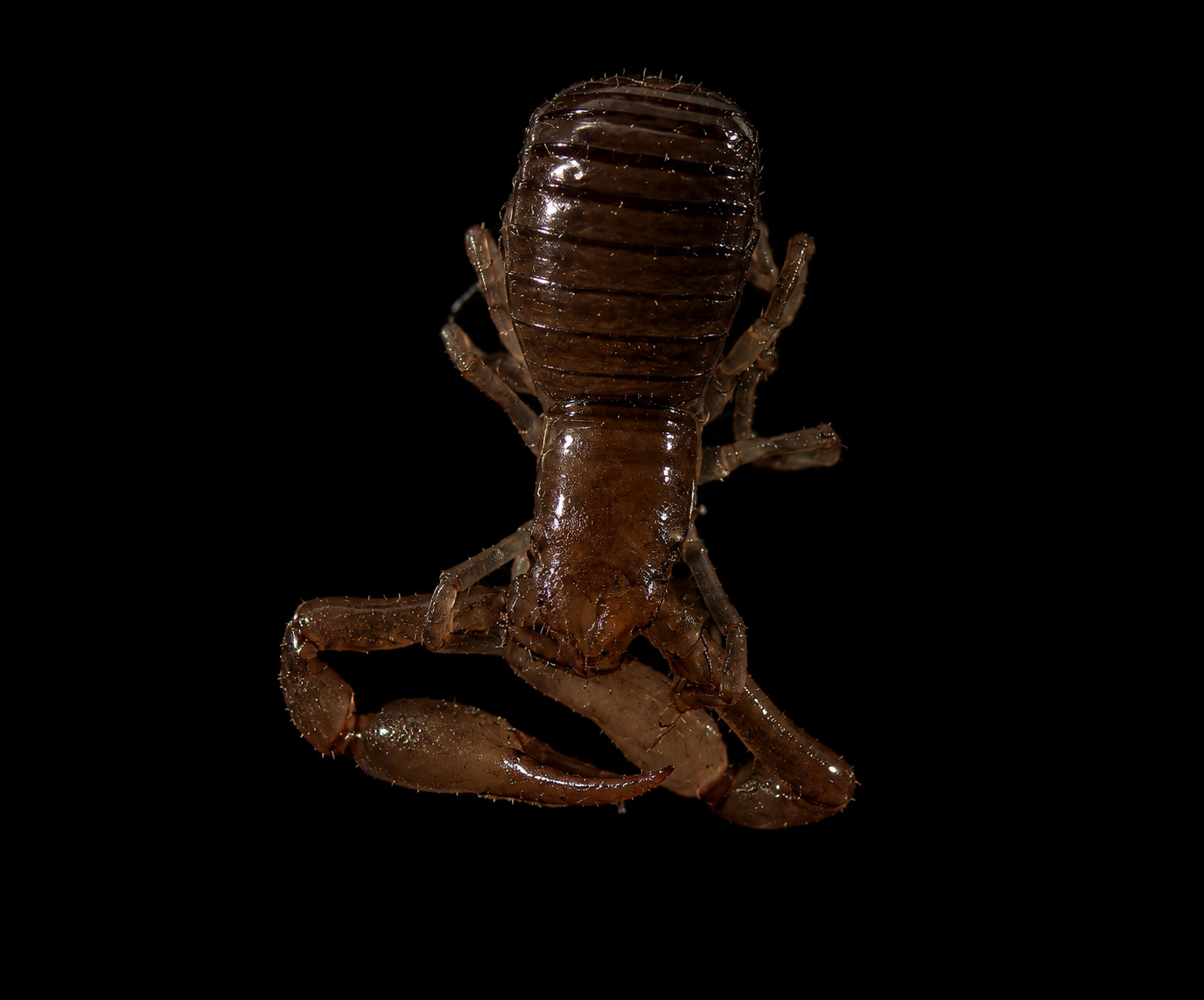
Arachnida · Pseudoscorpions
Identification
Small arachnids with pedipalps modified into pincers. They lack a tail and are usually found in litter, soil, bark or decaying wood.
Small arachnids with pedipalps modified into pincers. They lack a tail and are usually found in litter, soil, bark or decaying wood.
Ecology
Carnivorous arthropods and predators of small soil fauna. They are generally associated with grassland, woodland, litter and stable microhabitats.
Carnivorous arthropods and predators of small soil fauna. They are generally associated with grassland, woodland, litter and stable microhabitats.
Bioindicator value
Often linked to mature or restored habitats and relatively stable soil communities.
Often linked to mature or restored habitats and relatively stable soil communities.
20
Palpigrada
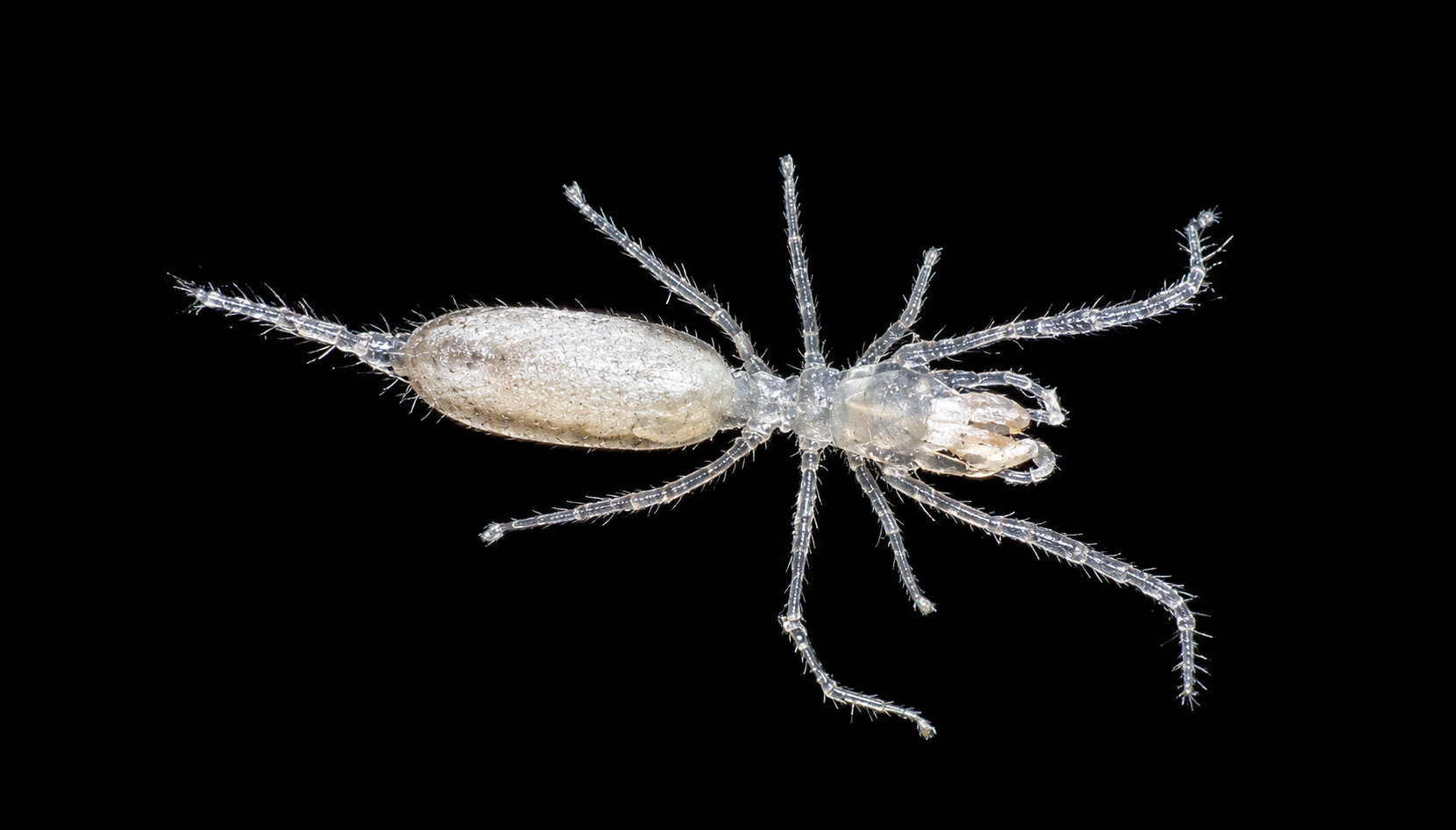
Arachnida · Microwhip scorpions
Identification
Very small arachnids with elongated body, delicate appendages and a terminal flagellum. Usually pale and adapted to soil pore spaces.
Very small arachnids with elongated body, delicate appendages and a terminal flagellum. Usually pale and adapted to soil pore spaces.
Ecology
Rarely encountered soil and cave-dwelling arachnids. Their ecology is still poorly known, and they are seldom recorded in monitoring studies.
Rarely encountered soil and cave-dwelling arachnids. Their ecology is still poorly known, and they are seldom recorded in monitoring studies.
Bioindicator value
Their occurrence may indicate highly structured, humid and stable below-ground habitats.
Their occurrence may indicate highly structured, humid and stable below-ground habitats.
20
Opiliones
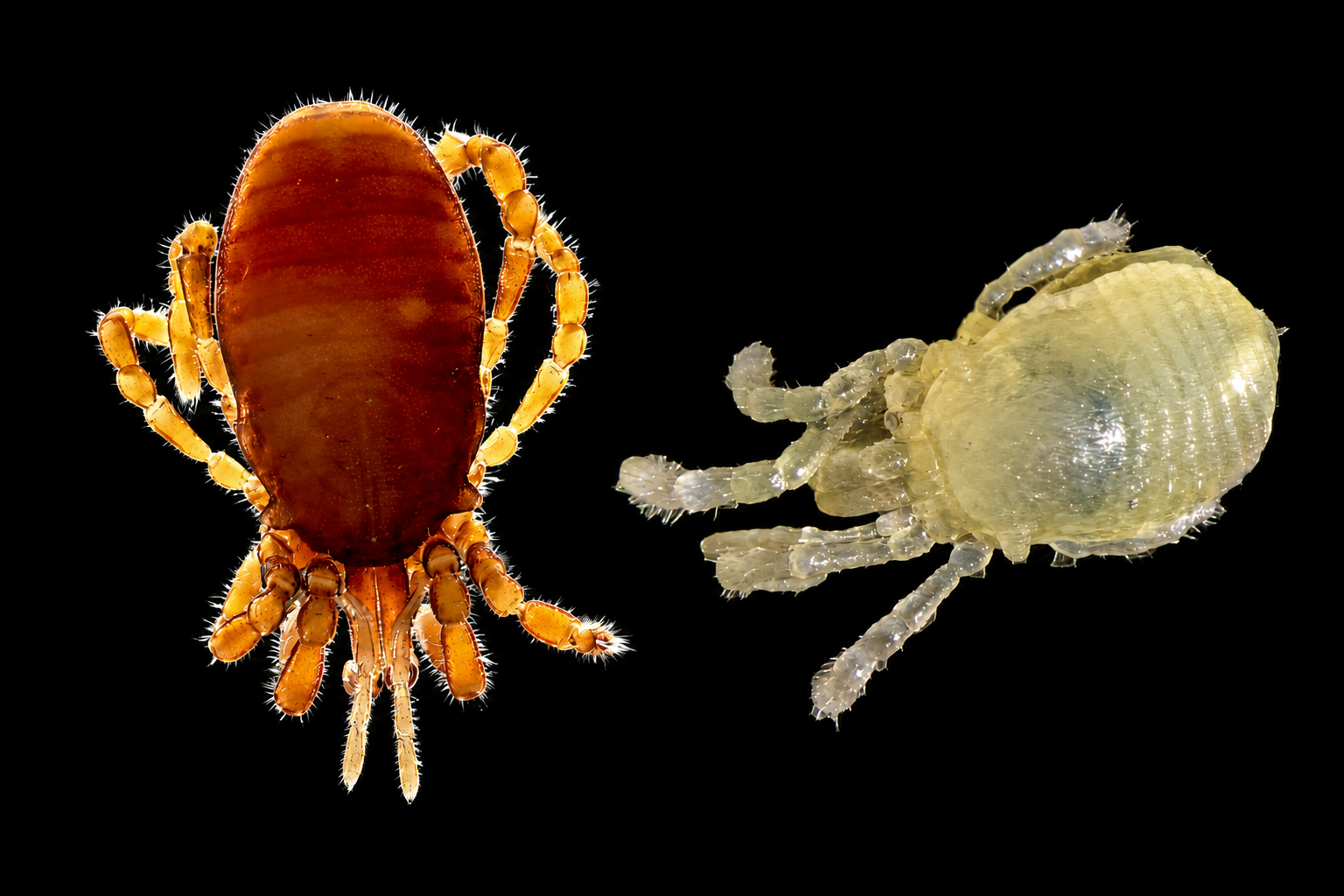
Arachnida · Harvestmen
Identification
Arachnids with broadly fused body regions, long legs and a single pair of eyes. They are usually surface-active rather than strictly soil-dwelling.
Arachnids with broadly fused body regions, long legs and a single pair of eyes. They are usually surface-active rather than strictly soil-dwelling.
Ecology
Generalist predators and scavengers occurring in forests, grasslands and agricultural habitats. Their distribution is strongly influenced by habitat structure.
Generalist predators and scavengers occurring in forests, grasslands and agricultural habitats. Their distribution is strongly influenced by habitat structure.
Bioindicator value
Useful as indicators of habitat complexity and disturbance, although taxonomy and mobility may limit their use.
Useful as indicators of habitat complexity and disturbance, although taxonomy and mobility may limit their use.
10
Araneae
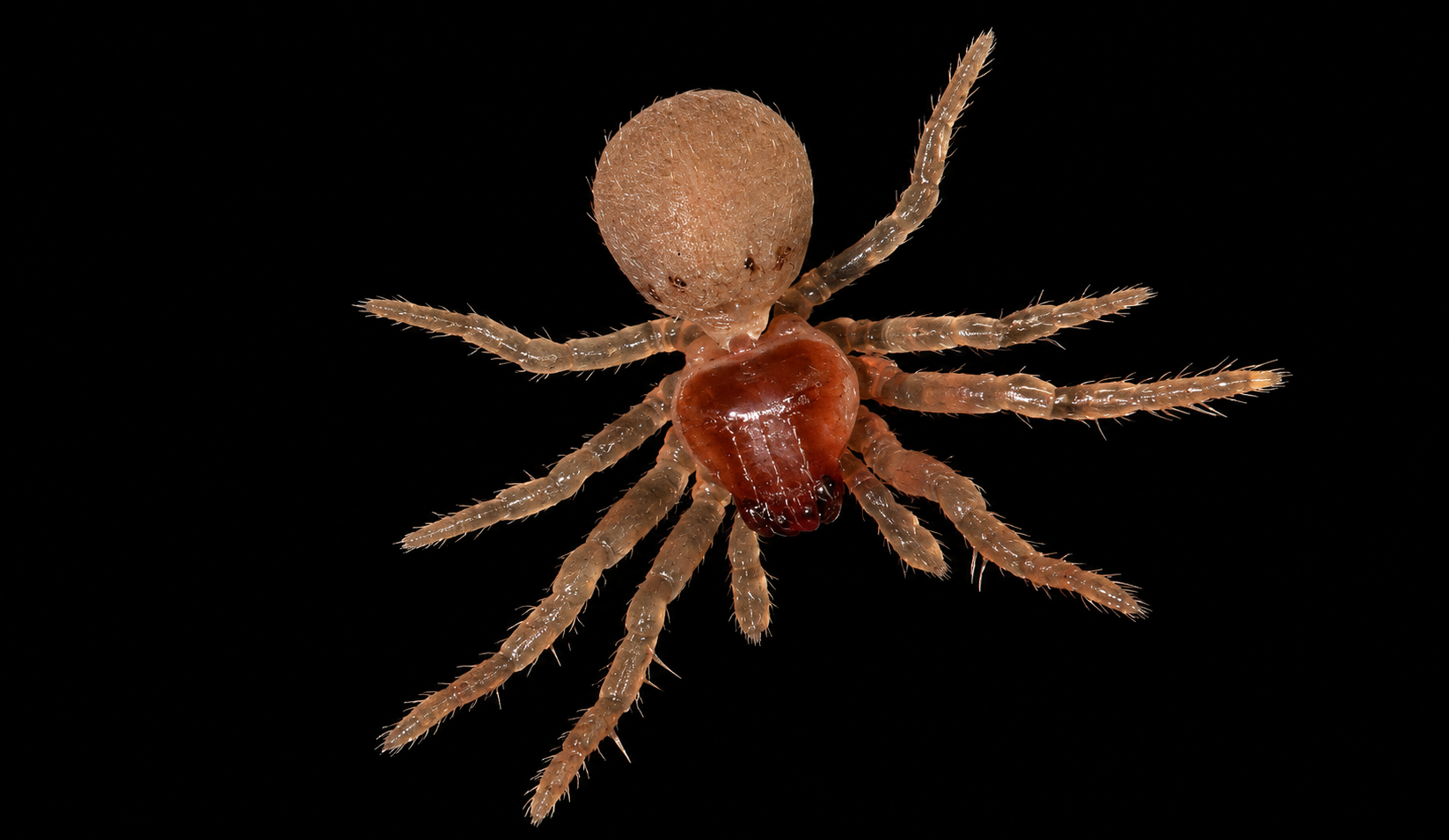
Arachnida · Spiders
Identification
Arachnids with a distinct narrowing between cephalothorax and abdomen. They have four pairs of legs and lack antennae. Unlike Opiliones, the body is clearly divided into two main regions.
Arachnids with a distinct narrowing between cephalothorax and abdomen. They have four pairs of legs and lack antennae. Unlike Opiliones, the body is clearly divided into two main regions.
Ecology
Mostly predators, occurring on the soil surface, in litter, vegetation, crevices and sheltered microhabitats. Their abundance and composition are influenced by vegetation structure and habitat complexity.
Mostly predators, occurring on the soil surface, in litter, vegetation, crevices and sheltered microhabitats. Their abundance and composition are influenced by vegetation structure and habitat complexity.
Bioindicator value
EMI depends on body size and degree of soil adaptation. Large or clearly epigeic spiders receive low EMI, while small and poorly pigmented forms indicate stronger association with soil microhabitats.
EMI depends on body size and degree of soil adaptation. Large or clearly epigeic spiders receive low EMI, while small and poorly pigmented forms indicate stronger association with soil microhabitats.
1
5
Acari
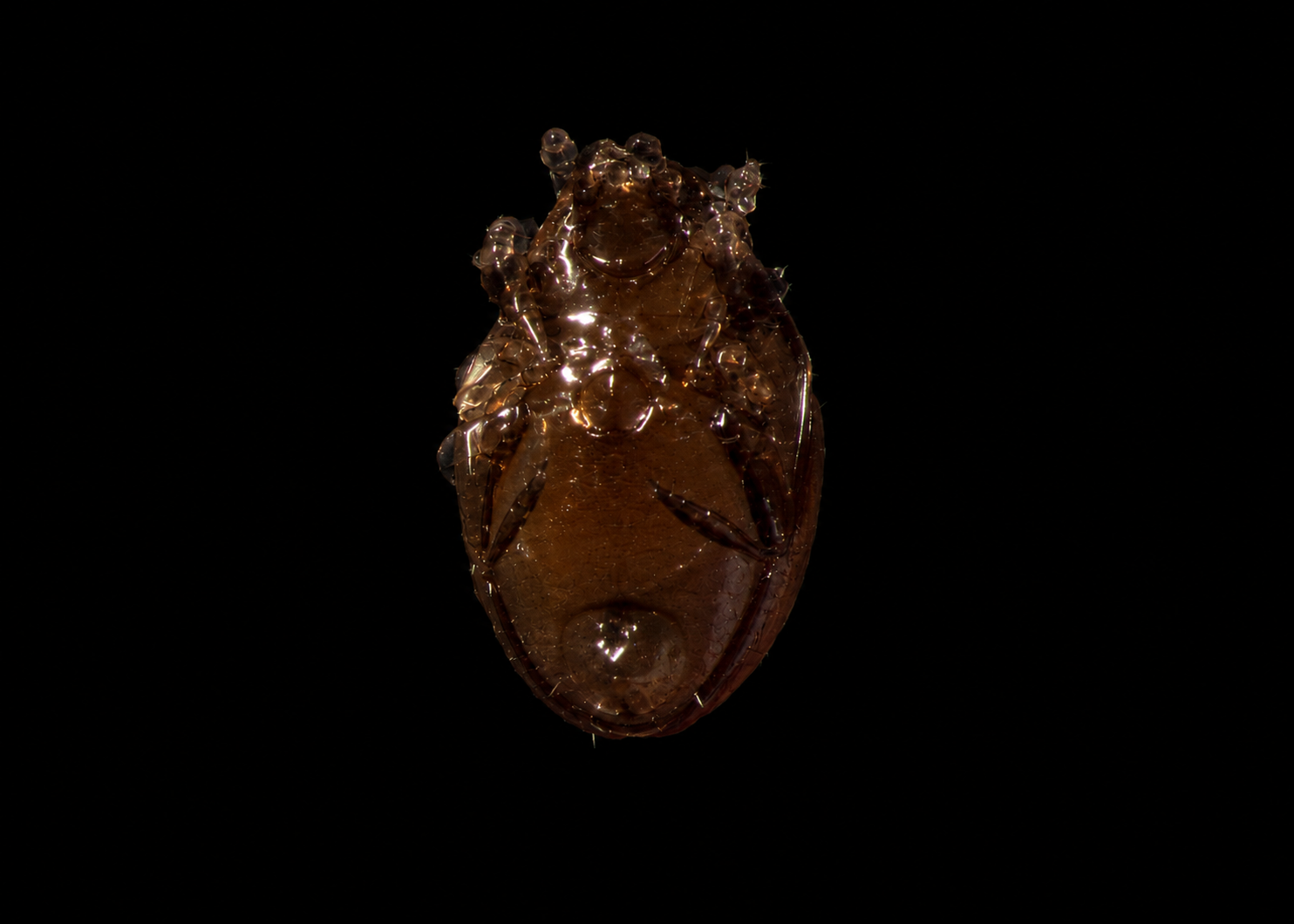
Arachnida · Soil mites
Identification
Very small arachnids without antennae. Adults usually have four pairs of legs and a compact body adapted to litter, humus and soil pores.
Very small arachnids without antennae. Adults usually have four pairs of legs and a compact body adapted to litter, humus and soil pores.
Ecology
One of the most abundant and diverse soil microarthropod groups, including decomposers, fungivores, bacterivores and predators.
One of the most abundant and diverse soil microarthropod groups, including decomposers, fungivores, bacterivores and predators.
Bioindicator value
Widely used in soil quality studies, often together with Collembola, because of their abundance, diversity and ecological relevance.
Widely used in soil quality studies, often together with Collembola, because of their abundance, diversity and ecological relevance.
20
Protura

Hexapoda · Protura · Proturans
Identification
Minute wingless hexapods lacking both eyes and antennae. The first pair of legs is directed forward and used as a sensory structure during movement.
Minute wingless hexapods lacking both eyes and antennae. The first pair of legs is directed forward and used as a sensory structure during movement.
Ecology
Protura inhabit humid soil pores, litter and deeper soil horizons. They are rarely collected and are thought to feed mainly on fungal and mycorrhizal resources.
Protura inhabit humid soil pores, litter and deeper soil horizons. They are rarely collected and are thought to feed mainly on fungal and mycorrhizal resources.
Bioindicator value
Their occurrence is generally associated with stable, undisturbed and well-structured soils.
Their occurrence is generally associated with stable, undisturbed and well-structured soils.
20
Diplura

Hexapoda · Diplura · Diplurans
Identification
Wingless hexapods with an elongated body, no eyes, long antennae and paired terminal appendages called cerci.
Wingless hexapods with an elongated body, no eyes, long antennae and paired terminal appendages called cerci.
Ecology
Usually found in litter, beneath stones or logs, and in deeper humid soil layers. They generally require stable moisture conditions.
Usually found in litter, beneath stones or logs, and in deeper humid soil layers. They generally require stable moisture conditions.
Bioindicator value
Frequently associated with native forests and habitats characterized by low levels of disturbance.
Frequently associated with native forests and habitats characterized by low levels of disturbance.
20
Collembola

Hexapoda · Collembola · Springtails
Identification
Small wingless hexapods with antennae and a furca that may be developed, reduced or absent. Pigmentation, eye development and appendage length vary markedly among forms.
Small wingless hexapods with antennae and a furca that may be developed, reduced or absent. Pigmentation, eye development and appendage length vary markedly among forms.
Ecology
Among the most abundant soil arthropods. They occur from the litter surface to deeper mineral horizons and play important roles in decomposition and nutrient cycling.
Among the most abundant soil arthropods. They occur from the litter surface to deeper mineral horizons and play important roles in decomposition and nutrient cycling.
Bioindicator value
Collembola show a broad gradient of adaptation from surface-dwelling to strongly soil-adapted forms and are among the most informative groups used in soil-quality assessment.
Collembola show a broad gradient of adaptation from surface-dwelling to strongly soil-adapted forms and are among the most informative groups used in soil-quality assessment.
1
2
4
6
8
10
20
Coleoptera
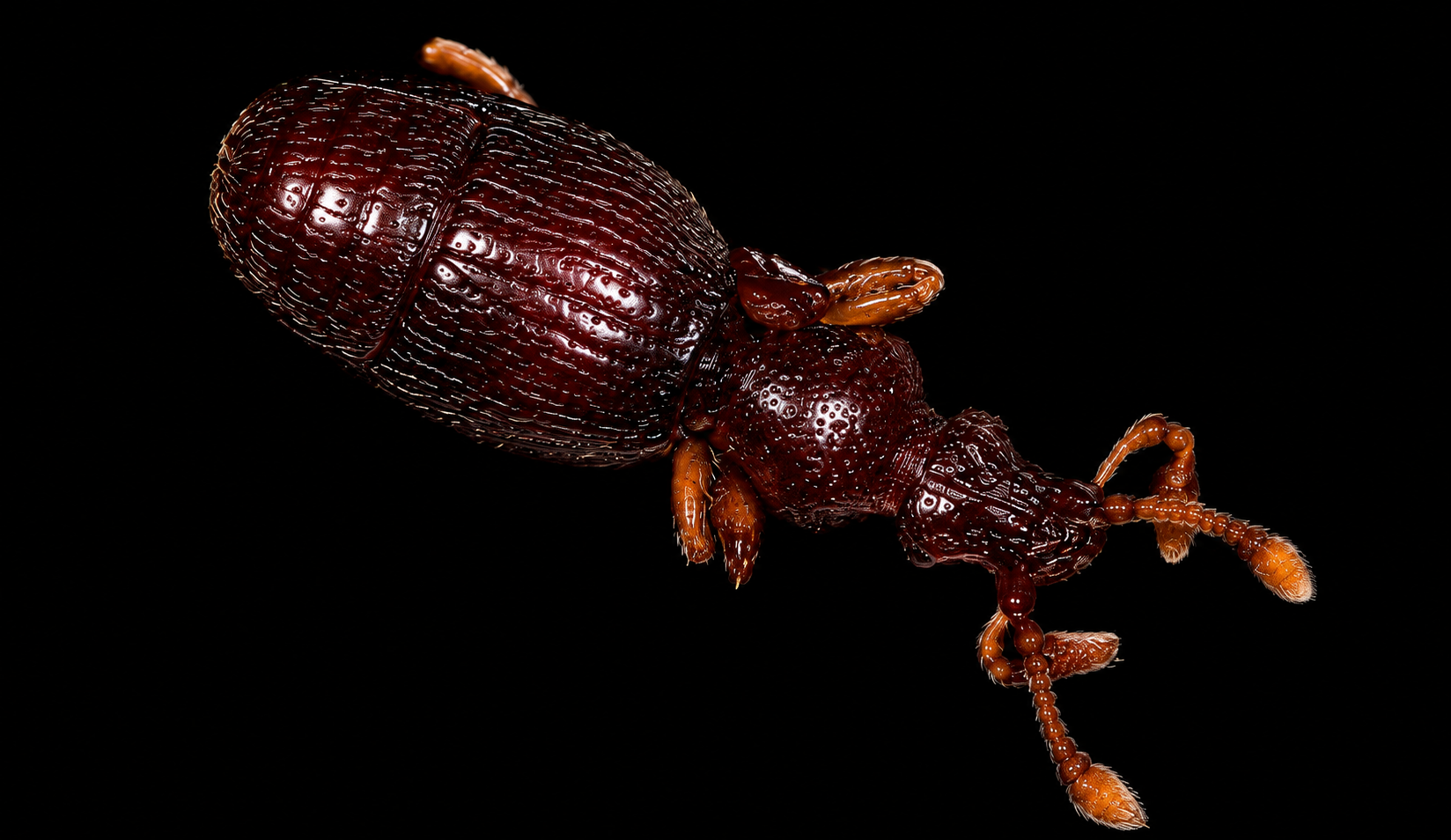
Insecta · Beetles
Identification
Adults with hardened forewings forming elytra; larvae usually soft-bodied, elongated and often strongly associated with soil, litter or decaying organic substrates.
Adults with hardened forewings forming elytra; larvae usually soft-bodied, elongated and often strongly associated with soil, litter or decaying organic substrates.
Ecology
Coleoptera include predators, herbivores, saproxylic forms and detritivores. Their communities often respond to habitat fragmentation, grazing, fertilization, forest cutting and land-use change.
Coleoptera include predators, herbivores, saproxylic forms and detritivores. Their communities often respond to habitat fragmentation, grazing, fertilization, forest cutting and land-use change.
Bioindicator value
EMI depends on life stage and degree of soil adaptation. Larvae are assigned EMI 10; adults range from epigeic forms to highly soil-adapted forms.
EMI depends on life stage and degree of soil adaptation. Larvae are assigned EMI 10; adults range from epigeic forms to highly soil-adapted forms.
1
5
10
15
20
Coleoptera larvae
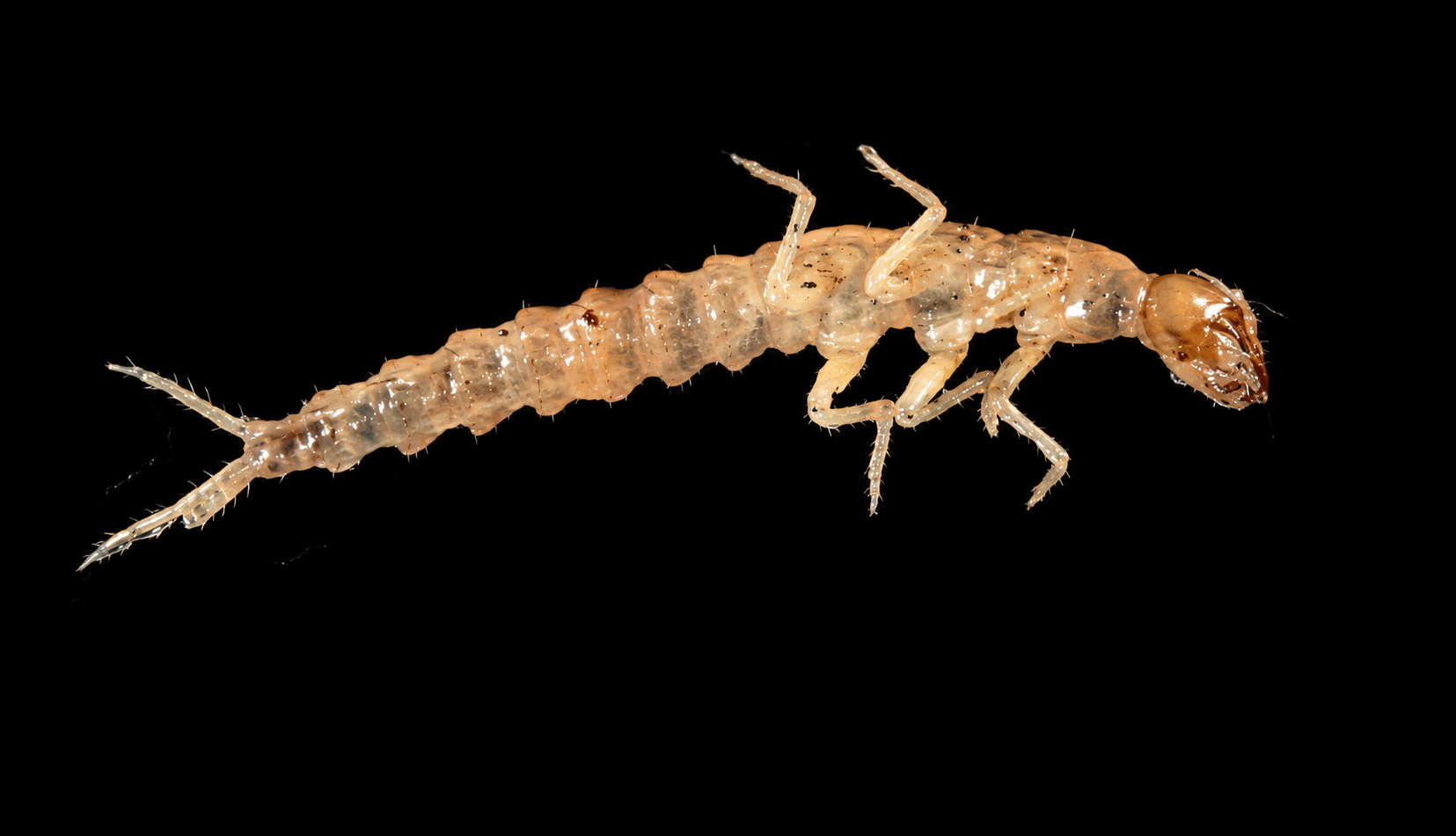
Insecta · Beetle larvae
Identification
Larval forms with elongated body, distinct head capsule and mouthparts. Legs may be present and well developed depending on the family.
Larval forms with elongated body, distinct head capsule and mouthparts. Legs may be present and well developed depending on the family.
Ecology
Soil-dwelling beetle larvae may act as predators, root feeders, detritivores or wood-associated decomposers, depending on the taxonomic group.
Soil-dwelling beetle larvae may act as predators, root feeders, detritivores or wood-associated decomposers, depending on the taxonomic group.
Bioindicator value
Larvae are directly linked to soil or litter habitats during development and are assigned a fixed QBS-ar EMI value.
Larvae are directly linked to soil or litter habitats during development and are assigned a fixed QBS-ar EMI value.
10
Hymenoptera
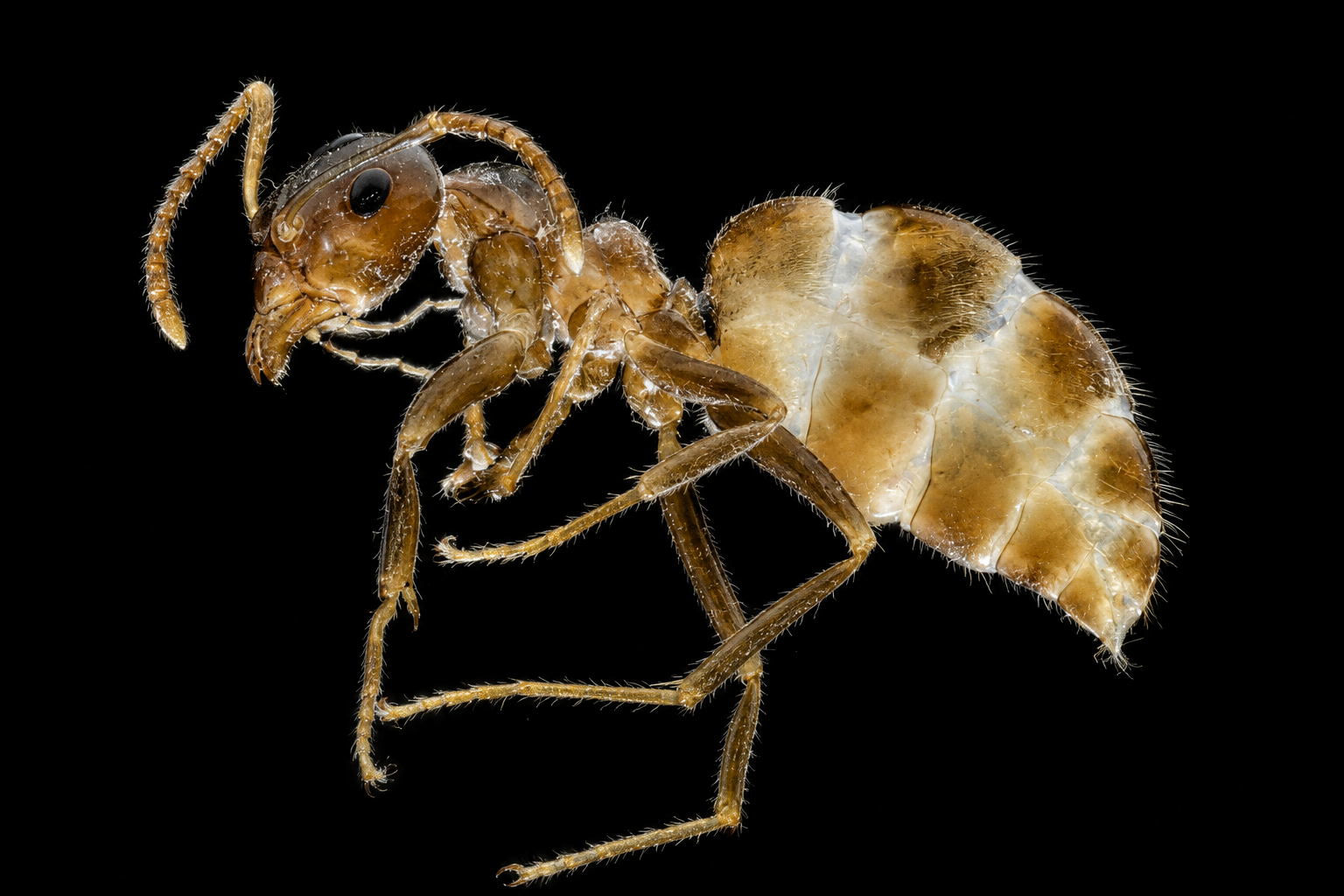
Insecta · Hymenopterans and ants
Identification
Insects with narrow waist in many adult forms; ants are wingless or winged social Hymenoptera.
Insects with narrow waist in many adult forms; ants are wingless or winged social Hymenoptera.
Ecology
Hymenoptera include parasitoids, predators, pollinators and social insects. Ants can act as ecosystem engineers, modifying soil structure, drainage, aeration and nutrient dynamics.
Hymenoptera include parasitoids, predators, pollinators and social insects. Ants can act as ecosystem engineers, modifying soil structure, drainage, aeration and nutrient dynamics.
Bioindicator value
Adults have low EMI, Formicidae intermediate EMI, and larvae higher EMI because of their stronger association with protected soil or nest environments.
Adults have low EMI, Formicidae intermediate EMI, and larvae higher EMI because of their stronger association with protected soil or nest environments.
1
5
Hymenoptera larvae

Insecta · Hymenopteran larvae
Identification
Soft-bodied larvae lacking true abdominal prolegs. The head capsule is usually weakly sclerotized and the body is often cylindrical or slightly curved. Most forms are legless or possess only reduced thoracic appendages.
Soft-bodied larvae lacking true abdominal prolegs. The head capsule is usually weakly sclerotized and the body is often cylindrical or slightly curved. Most forms are legless or possess only reduced thoracic appendages.
Ecology
Hymenopteran larvae occupy a wide range of ecological niches, including parasitoids, predators, scavengers and social insects. In soil samples they are frequently associated with nests, galleries, decaying organic matter and litter habitats.
Hymenopteran larvae occupy a wide range of ecological niches, including parasitoids, predators, scavengers and social insects. In soil samples they are frequently associated with nests, galleries, decaying organic matter and litter habitats.
Bioindicator value
Larval stages show a stronger association with protected soil and litter environments than adults and therefore receive a higher EMI value within the QBS-ar framework.
Larval stages show a stronger association with protected soil and litter environments than adults and therefore receive a higher EMI value within the QBS-ar framework.
10
Diptera
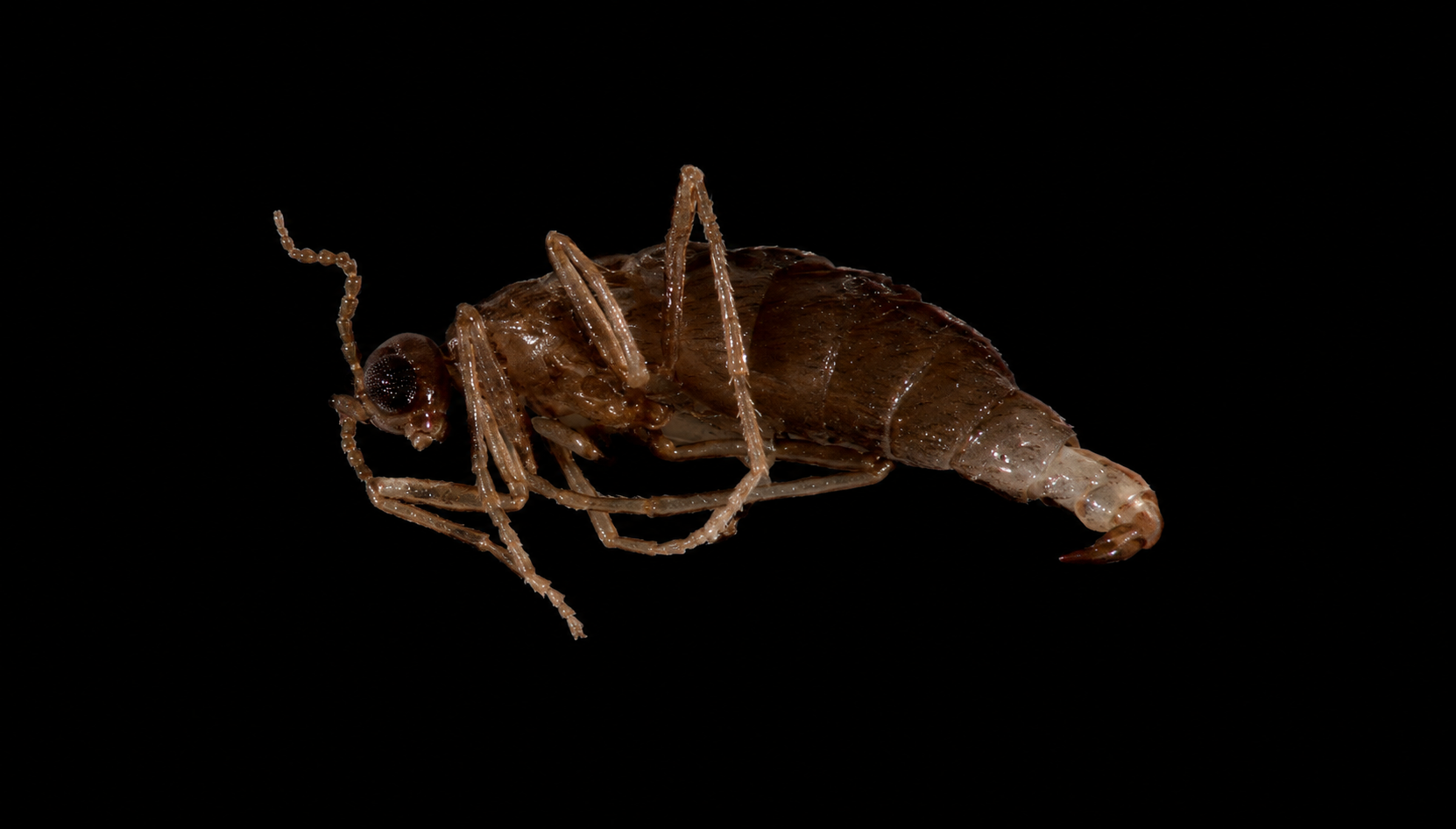
Insecta · Flies
Identification
Adults with one functional pair of wings and hindwings modified into halteres; larvae are soft-bodied, legless or weakly sclerotized, and often associated with moist organic substrates.
Adults with one functional pair of wings and hindwings modified into halteres; larvae are soft-bodied, legless or weakly sclerotized, and often associated with moist organic substrates.
Ecology
Diptera include many trophic groups. Larvae can contribute to decomposition and nutrient cycling and are strongly influenced by dead organic matter and soil moisture.
Diptera include many trophic groups. Larvae can contribute to decomposition and nutrient cycling and are strongly influenced by dead organic matter and soil moisture.
Bioindicator value
Adults are mobile and weakly linked to soil, whereas larvae are more informative for soil condition because they develop within litter, organic matter or soil.
Adults are mobile and weakly linked to soil, whereas larvae are more informative for soil condition because they develop within litter, organic matter or soil.
1
10
Diptera larvae
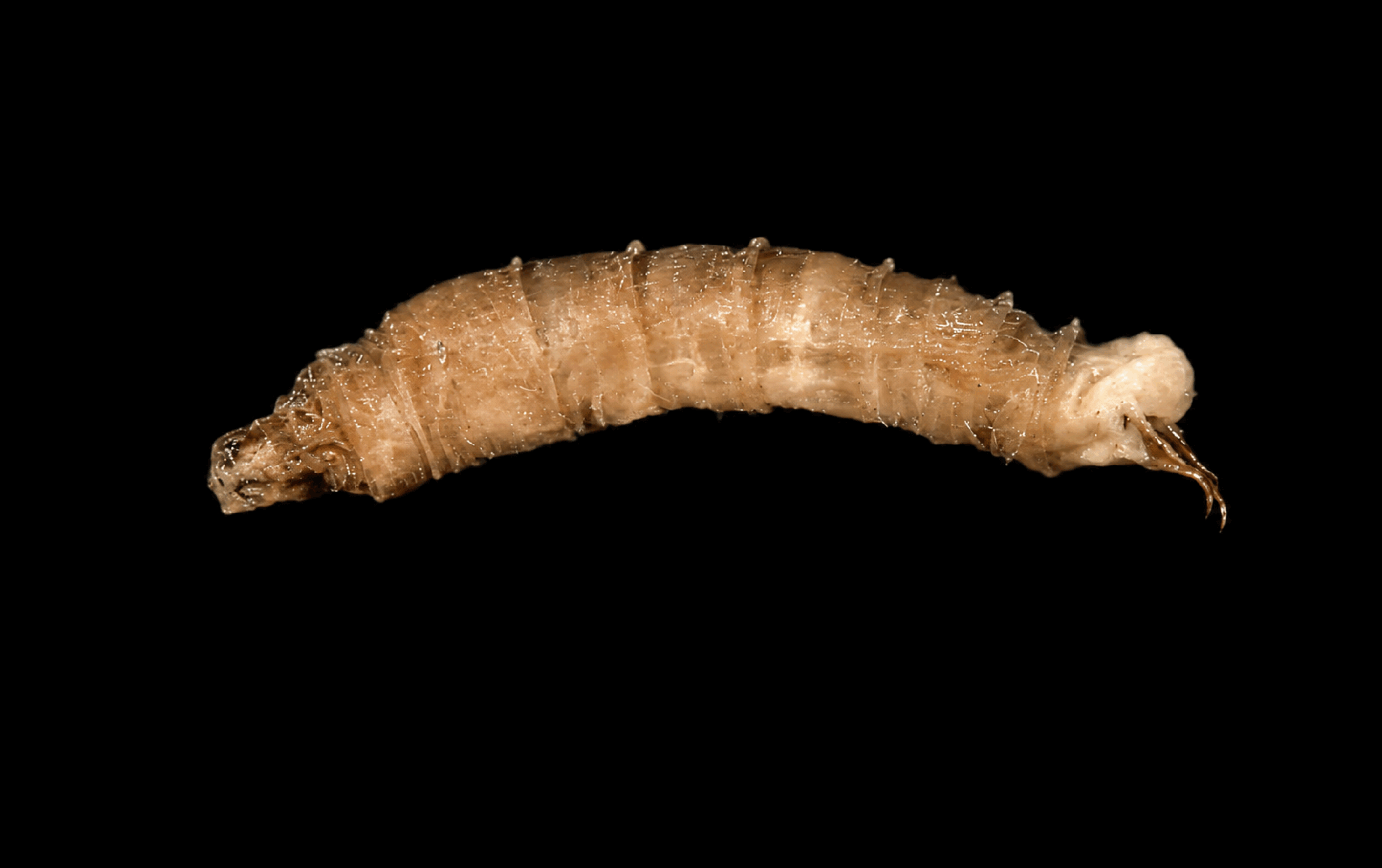
Insecta · Fly larvae
Identification
Soft-bodied larvae, usually without true legs, with variable head development depending on the family.
Soft-bodied larvae, usually without true legs, with variable head development depending on the family.
Ecology
Larvae may be saprophagous, microphagous, mycophagous, phytophagous or predatory. Many occur in litter and moist soil layers.
Larvae may be saprophagous, microphagous, mycophagous, phytophagous or predatory. Many occur in litter and moist soil layers.
Bioindicator value
Soil-dwelling larvae are sensitive to moisture, tillage and organic matter input and are assigned EMI 10.
Soil-dwelling larvae are sensitive to moisture, tillage and organic matter input and are assigned EMI 10.
10
Hemiptera
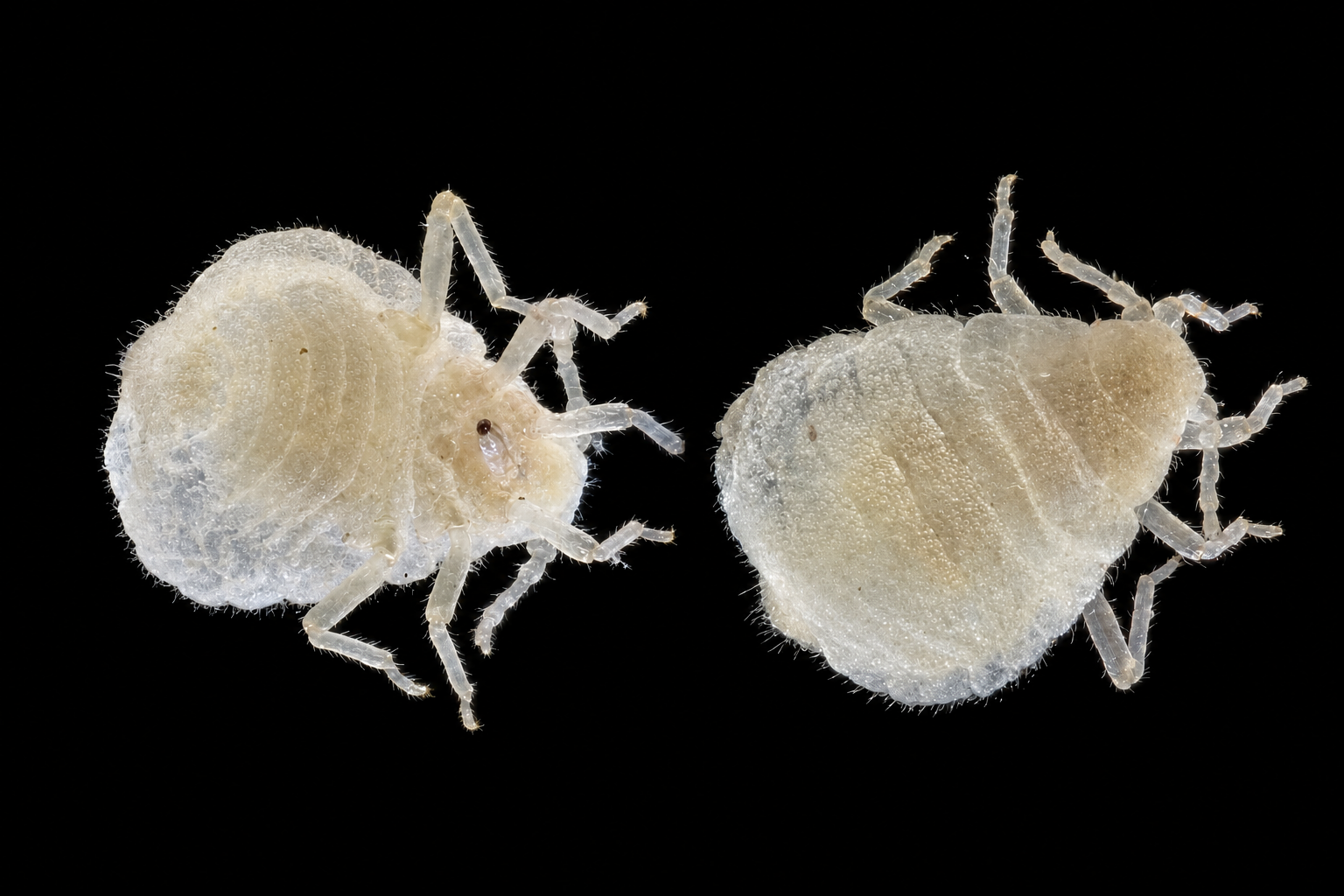
Insecta · True bugs
Identification
Insects with piercing-sucking mouthparts. Adults and most nymphs are generally epigeic, while cicada larvae are soil-dwelling root feeders.
Insects with piercing-sucking mouthparts. Adults and most nymphs are generally epigeic, while cicada larvae are soil-dwelling root feeders.
Ecology
Hemiptera include plant feeders, predators and other functional groups. Soil relevance is strongest in subterranean larval stages such as cicada nymphs.
Hemiptera include plant feeders, predators and other functional groups. Soil relevance is strongest in subterranean larval stages such as cicada nymphs.
Bioindicator value
Adult or surface forms are assigned low EMI, while cicada larvae receive higher EMI because they develop underground.
Adult or surface forms are assigned low EMI, while cicada larvae receive higher EMI because they develop underground.
1
10
Lepidoptera larvae
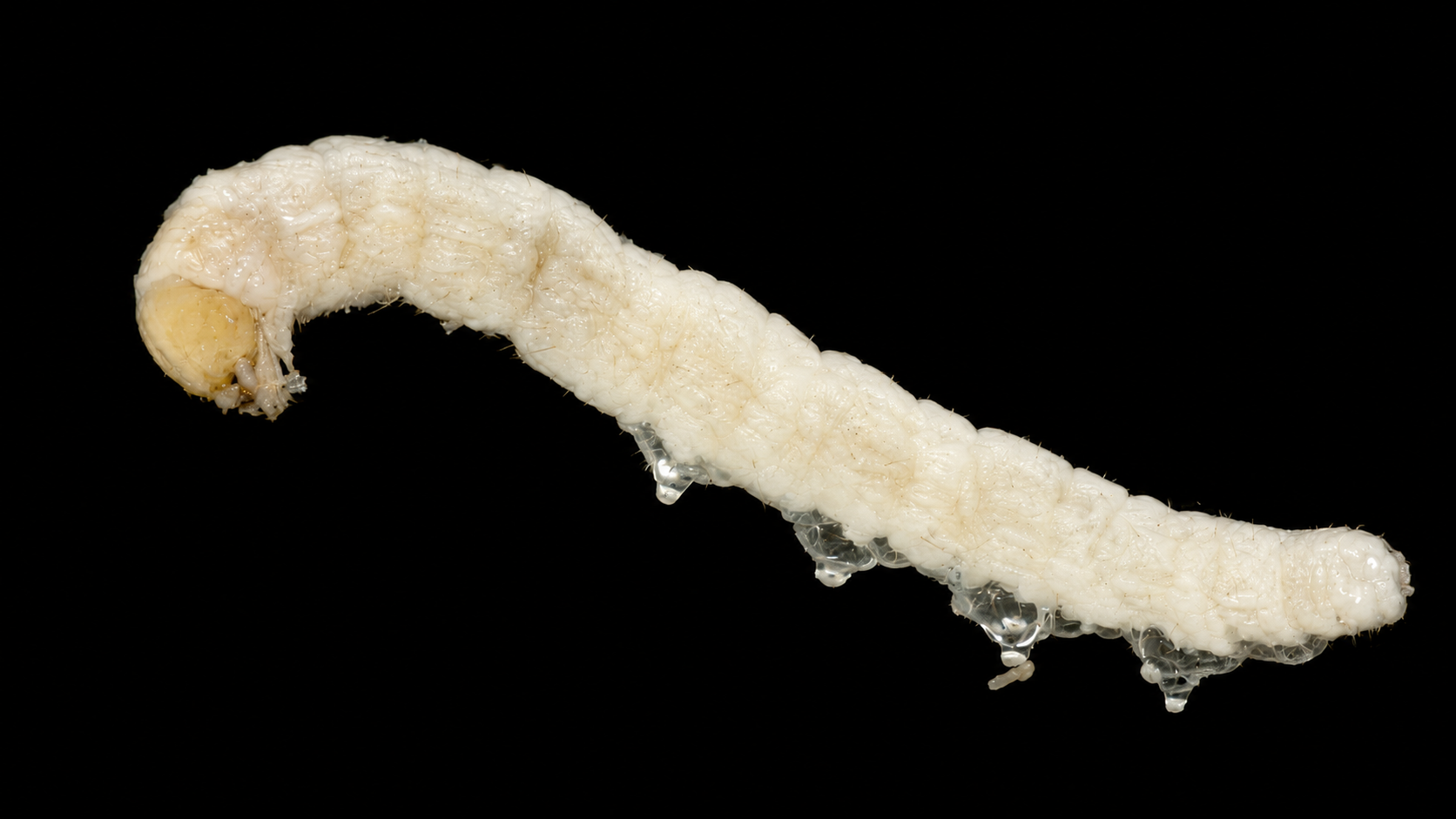
Insecta · Caterpillars
Identification
Soft-bodied larvae with distinct head capsule, thoracic legs and abdominal prolegs.
Soft-bodied larvae with distinct head capsule, thoracic legs and abdominal prolegs.
Ecology
Mostly herbivorous larvae, sometimes occurring in litter, roots or soil surface habitats during development.
Mostly herbivorous larvae, sometimes occurring in litter, roots or soil surface habitats during development.
Bioindicator value
Soil-associated larval stages are assigned a fixed EMI value.
Soil-associated larval stages are assigned a fixed EMI value.
10
Mecoptera larvae

Insecta · Scorpionfly larvae
Identification
Larvae generally caterpillar-like, with head capsule and segmented body, often associated with moist litter.
Larvae generally caterpillar-like, with head capsule and segmented body, often associated with moist litter.
Ecology
Larval stages may occur in litter or soil organic horizons, where they feed on decomposing material or small organisms.
Larval stages may occur in litter or soil organic horizons, where they feed on decomposing material or small organisms.
Bioindicator value
Soil- or litter-associated larvae are assigned EMI 10.
Soil- or litter-associated larvae are assigned EMI 10.
10
Thysanura
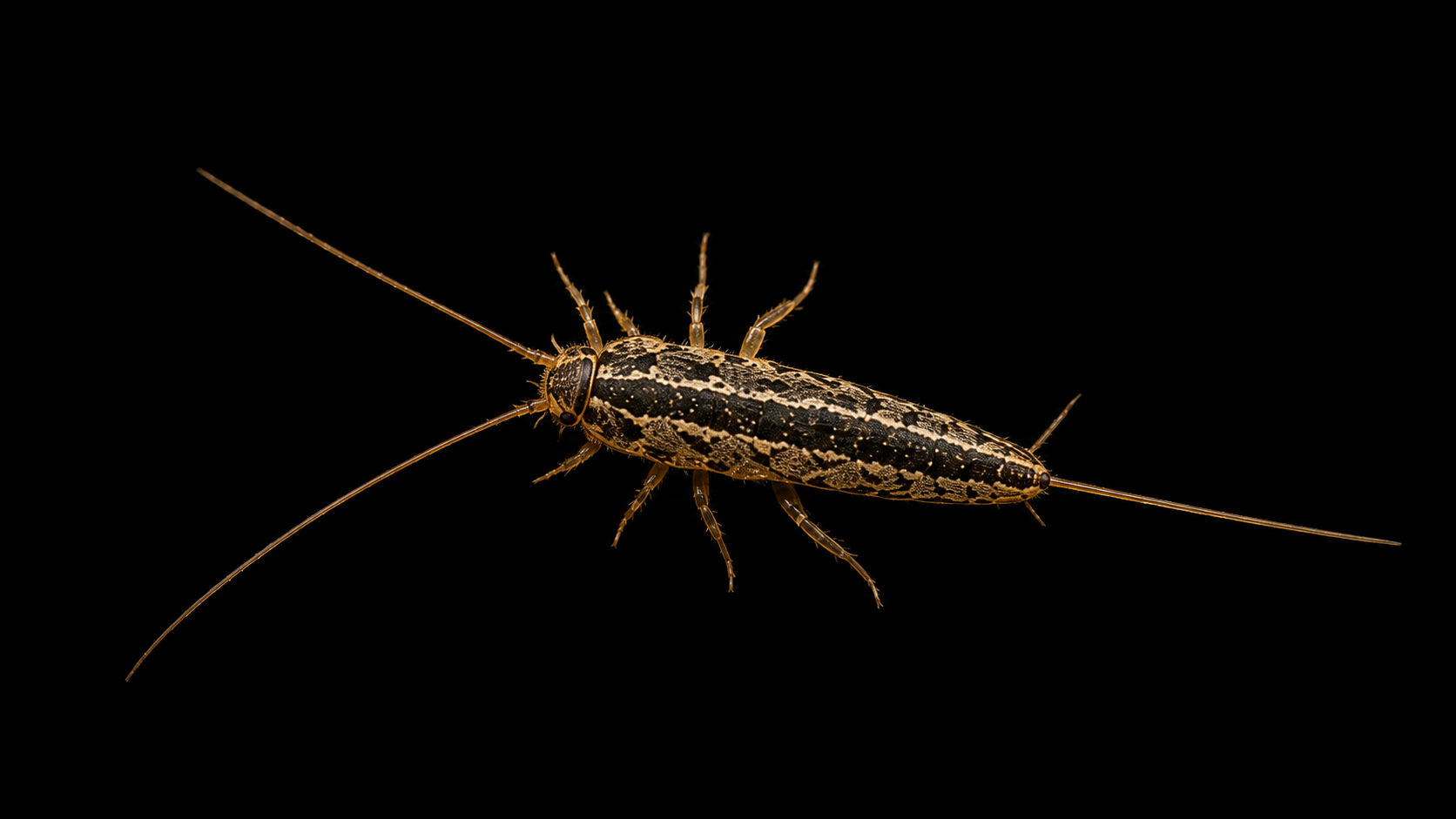
Insecta · Bristletails / silverfish-like forms
Identification
Wingless insects with elongated body, long antennae and terminal filaments.
Wingless insects with elongated body, long antennae and terminal filaments.
Ecology
Often associated with litter, stones, bark, dry organic debris or sheltered microhabitats.
Often associated with litter, stones, bark, dry organic debris or sheltered microhabitats.
Bioindicator value
Assigned EMI 10 in the QBS-ar framework.
Assigned EMI 10 in the QBS-ar framework.
10
Thysanoptera
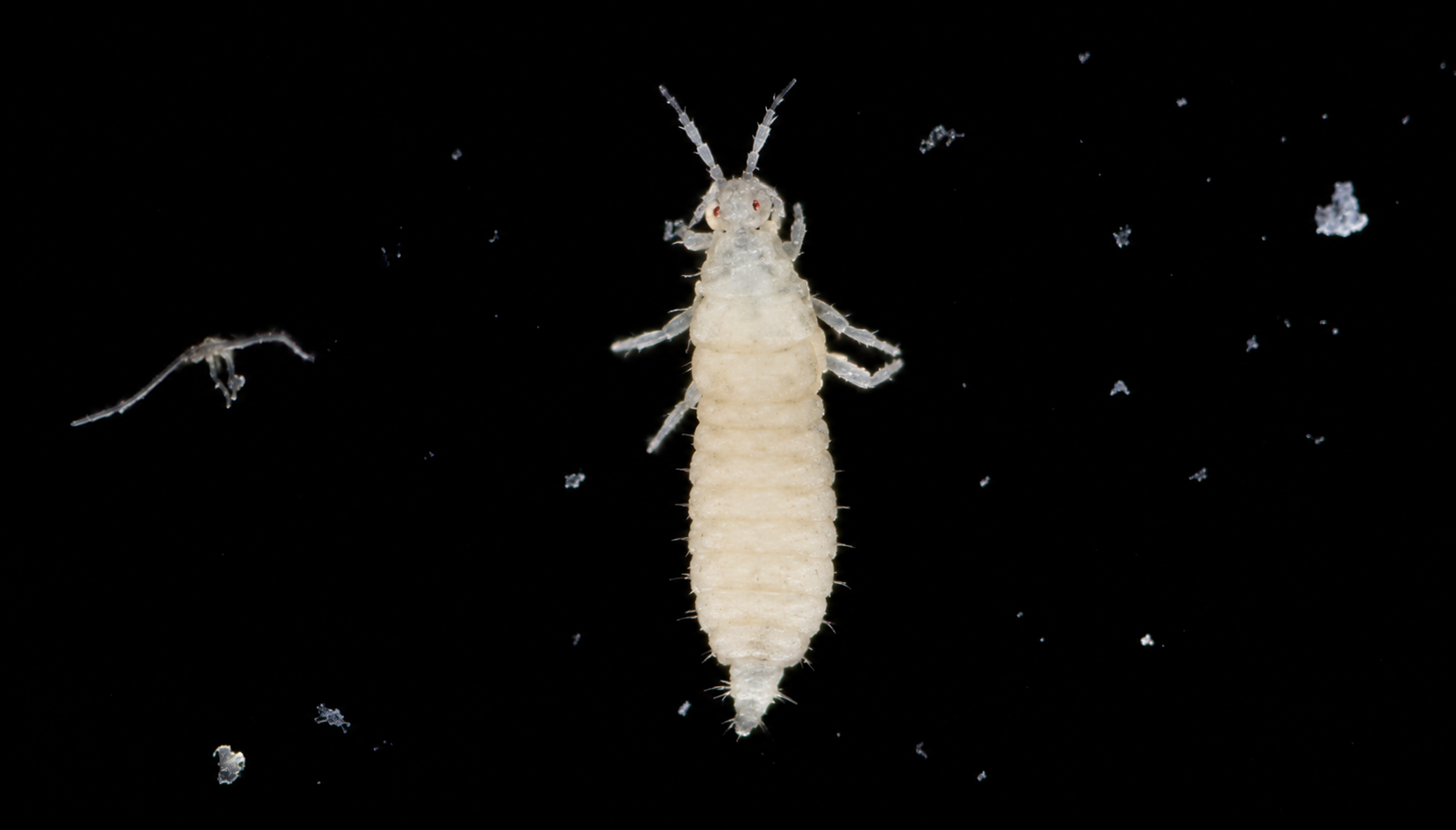
Insecta · Thrips
Identification
Minute slender insects, often with narrow fringed wings in adults and asymmetrical piercing-sucking mouthparts.
Minute slender insects, often with narrow fringed wings in adults and asymmetrical piercing-sucking mouthparts.
Ecology
Mostly associated with vegetation, flowers, fungi or litter surfaces; only weakly linked to the soil matrix.
Mostly associated with vegetation, flowers, fungi or litter surfaces; only weakly linked to the soil matrix.
Bioindicator value
Surface-associated forms are assigned low EMI.
Surface-associated forms are assigned low EMI.
1
Dermaptera
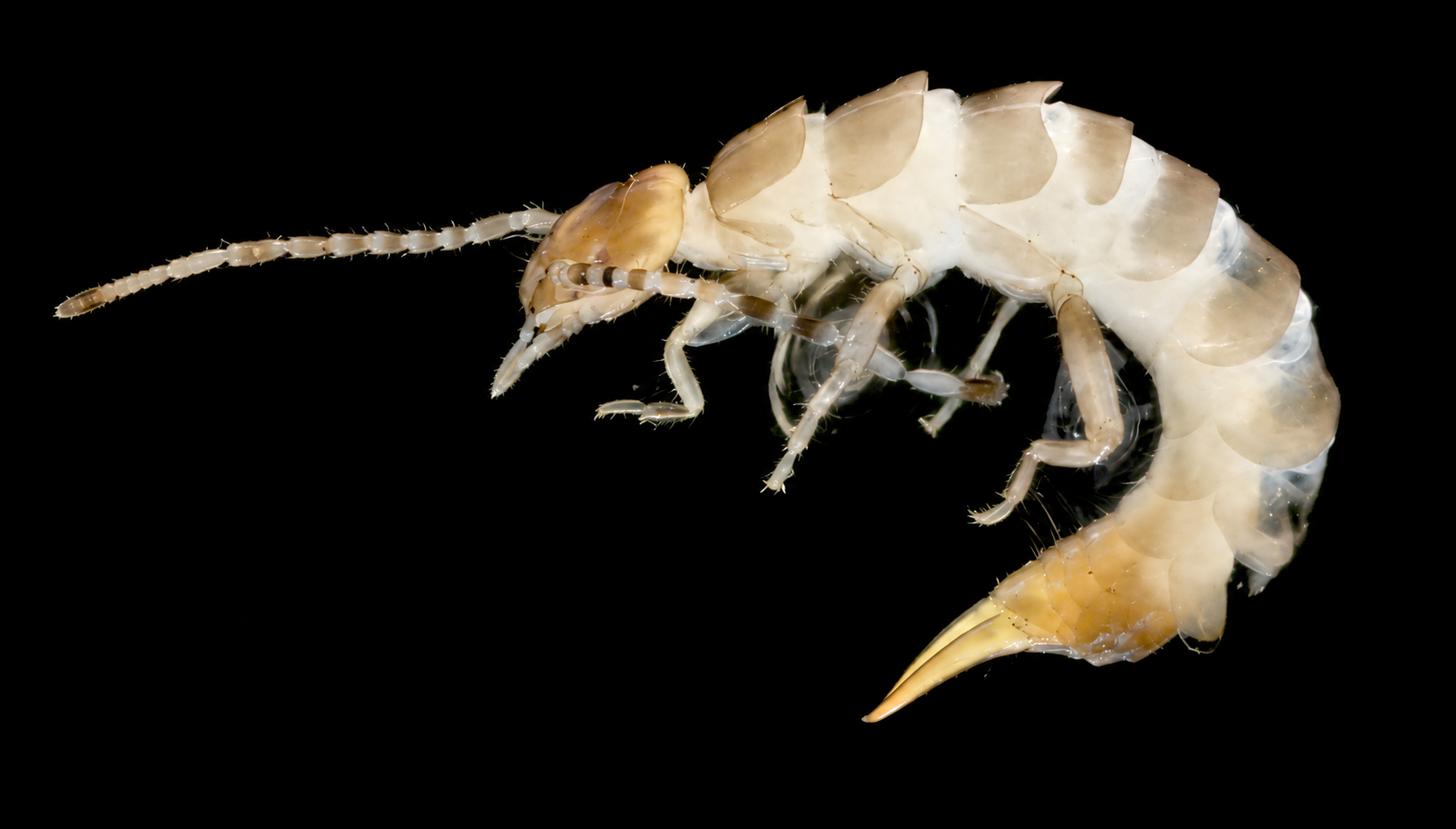
Insecta · Earwigs
Identification
Elongated insects with characteristic forceps-like cerci at the end of the abdomen.
Elongated insects with characteristic forceps-like cerci at the end of the abdomen.
Ecology
Usually surface-active organisms occurring under stones, bark, litter and other sheltered habitats.
Usually surface-active organisms occurring under stones, bark, litter and other sheltered habitats.
Bioindicator value
Mostly epigeic forms with low soil specialization.
Mostly epigeic forms with low soil specialization.
1
Orthoptera
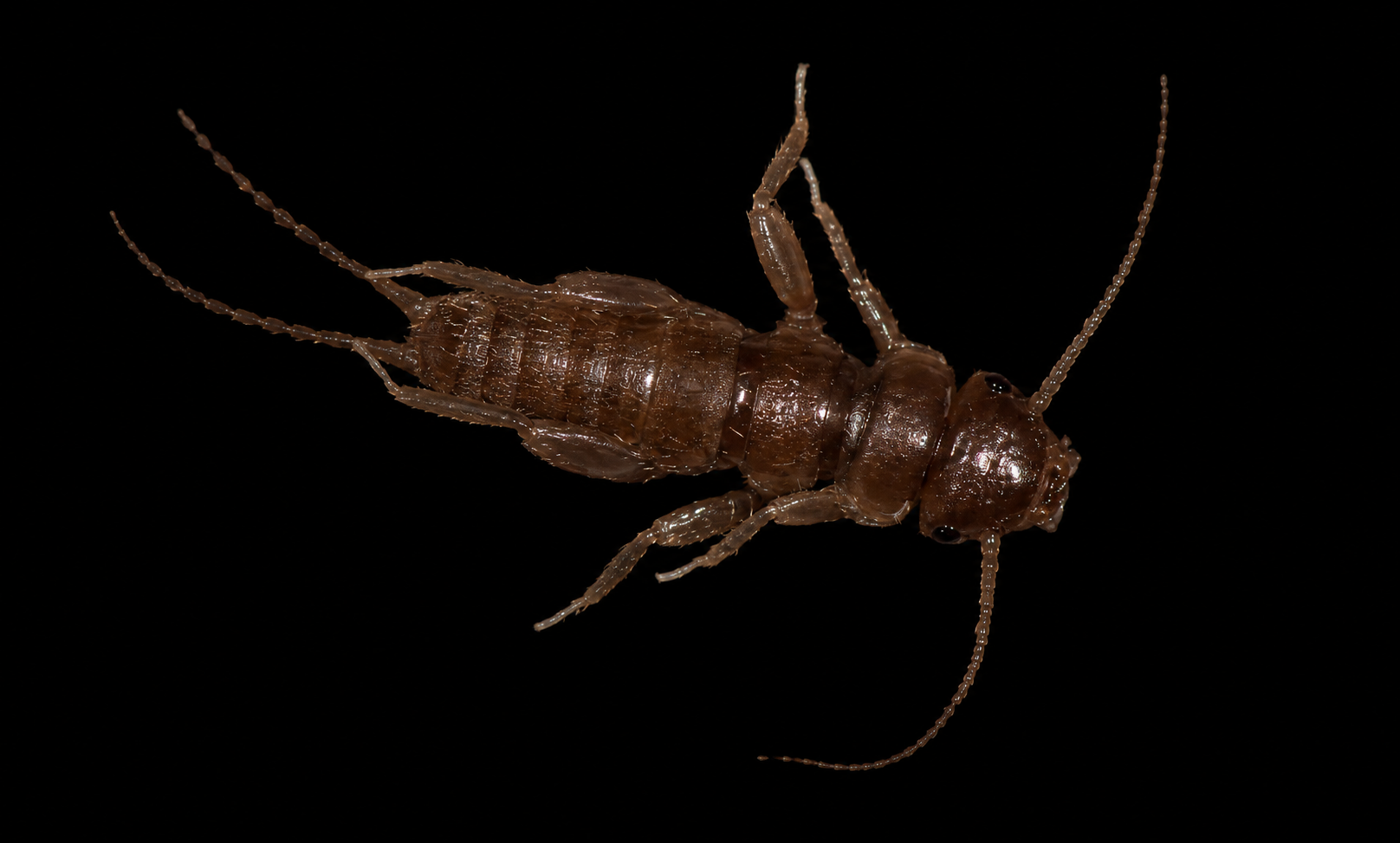
Insecta · Grasshoppers, crickets and allies
Identification
Insects with strong hind legs adapted for jumping; crickets and mole-cricket-like forms may be more closely associated with soil.
Insects with strong hind legs adapted for jumping; crickets and mole-cricket-like forms may be more closely associated with soil.
Ecology
Orthoptera respond strongly to vegetation structure, microclimate and land management, especially in grasslands.
Orthoptera respond strongly to vegetation structure, microclimate and land management, especially in grasslands.
Bioindicator value
Most forms have low EMI, while soil-adapted Gryllidae are assigned high EMI.
Most forms have low EMI, while soil-adapted Gryllidae are assigned high EMI.
1
20
Embioptera

Insecta · Webspinners
Identification
Elongated insects with silk-producing structures on the forelegs, living in silken galleries.
Elongated insects with silk-producing structures on the forelegs, living in silken galleries.
Ecology
Gregarious insects inhabiting silk tunnels and chambers, usually in protected microhabitats.
Gregarious insects inhabiting silk tunnels and chambers, usually in protected microhabitats.
Bioindicator value
Rarely recorded in soil monitoring, but associated with structured and stable habitats.
Rarely recorded in soil monitoring, but associated with structured and stable habitats.
10
Blattodea

Insecta · Cockroaches and allies
Identification
Flattened insects with long antennae, shield-like pronotum and cursorial legs.
Flattened insects with long antennae, shield-like pronotum and cursorial legs.
Ecology
Some forms are associated with litter, dead wood, organic debris and sheltered soil-surface microhabitats.
Some forms are associated with litter, dead wood, organic debris and sheltered soil-surface microhabitats.
Bioindicator value
Assigned intermediate EMI in QBS-ar.
Assigned intermediate EMI in QBS-ar.
5
Psocoptera
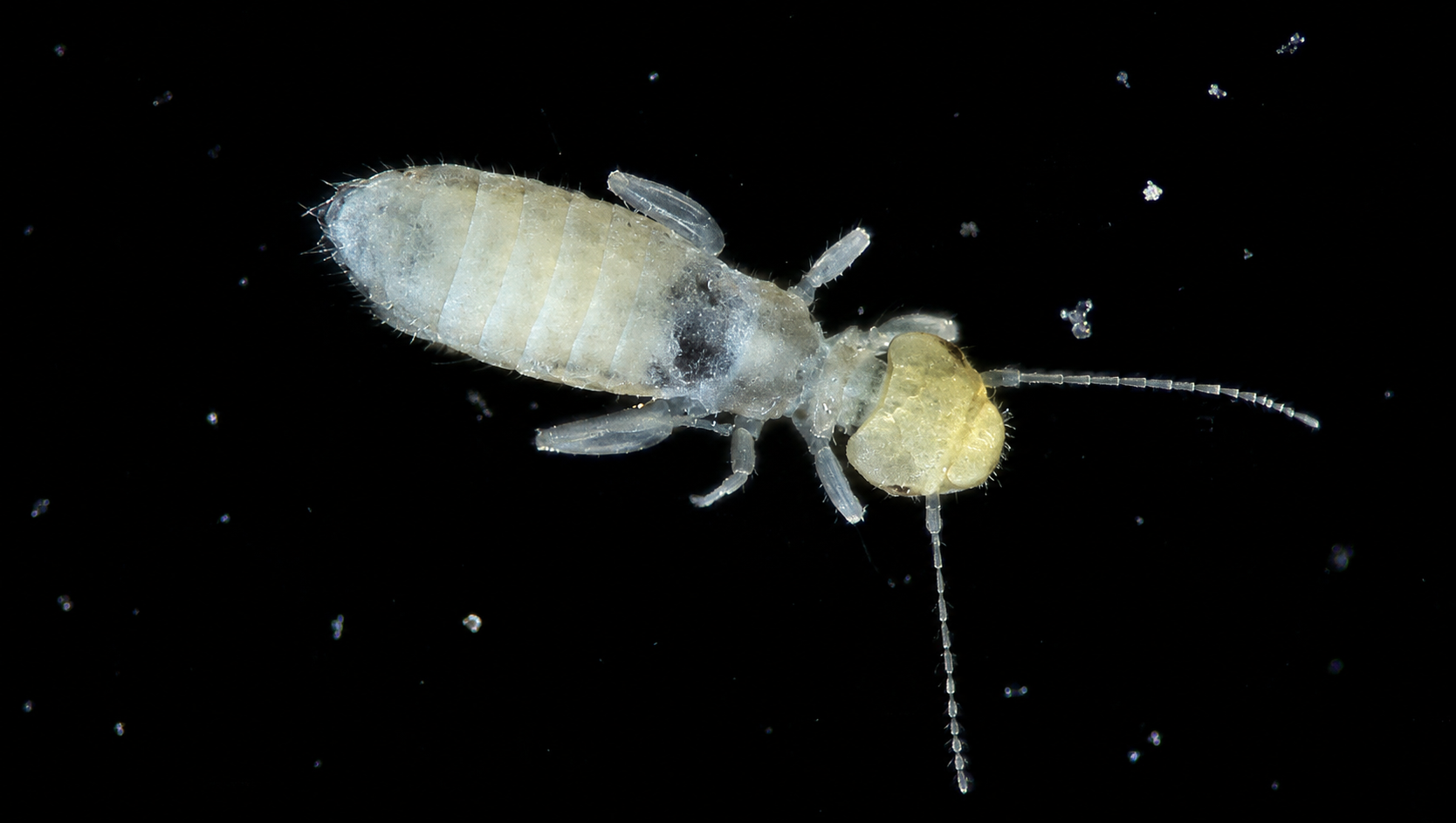
Insecta · Barklice and booklice
Identification
Small soft-bodied insects with relatively large head and chewing mouthparts.
Small soft-bodied insects with relatively large head and chewing mouthparts.
Ecology
Often associated with bark, litter, fungi, algae and organic residues in humid microhabitats.
Often associated with bark, litter, fungi, algae and organic residues in humid microhabitats.
Bioindicator value
Mostly surface- or litter-associated forms with low EMI.
Mostly surface- or litter-associated forms with low EMI.
1
Pauropoda
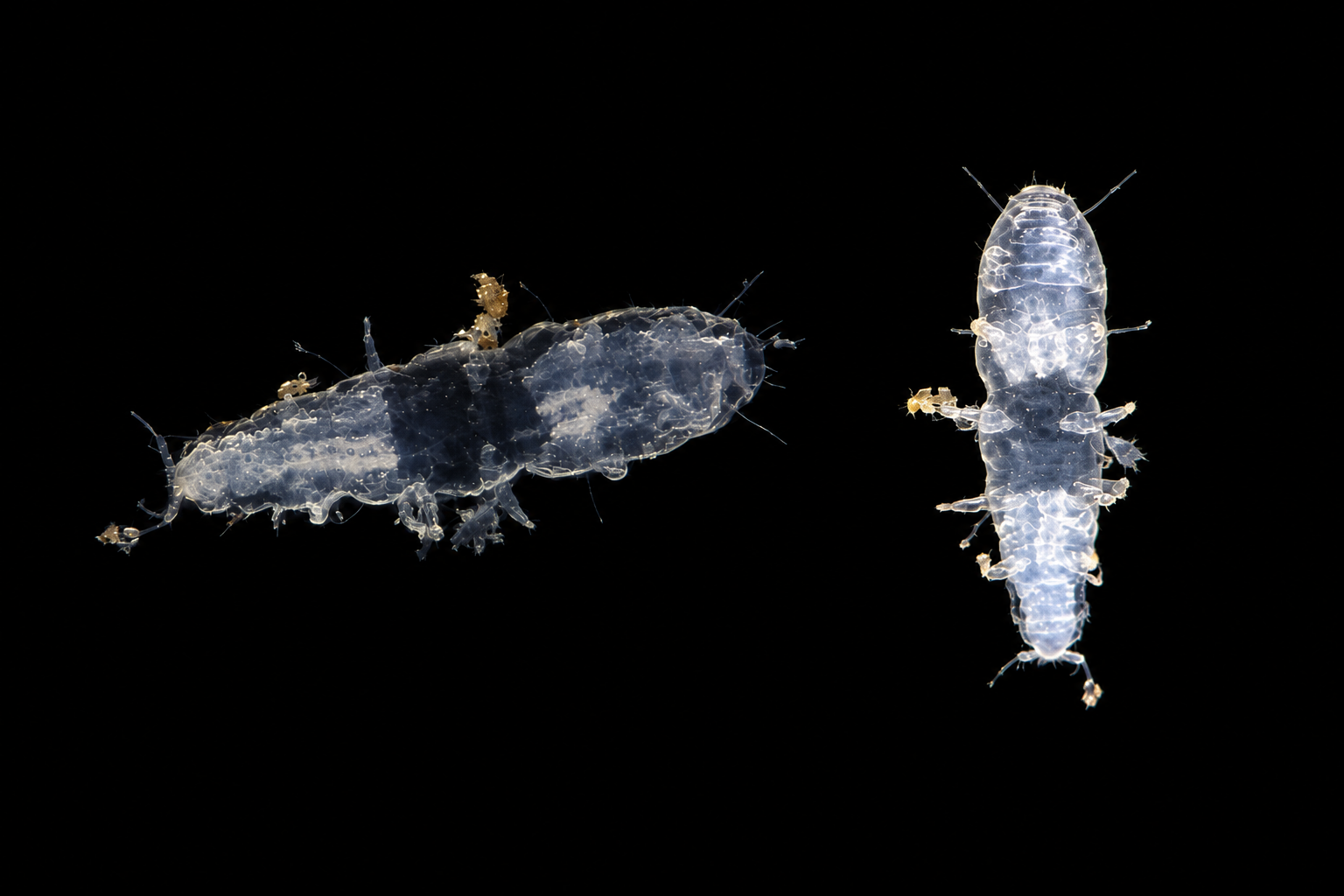
Myriapoda · Pauropods
Identification
Tiny soft-bodied myriapods with branched antennae and numerous body segments. Usually found in soil pores and humus layers.
Tiny soft-bodied myriapods with branched antennae and numerous body segments. Usually found in soil pores and humus layers.
Ecology
Pauropods inhabit humid, organic-rich soils and are strongly associated with undisturbed habitats.
Pauropods inhabit humid, organic-rich soils and are strongly associated with undisturbed habitats.
Bioindicator value
Highly sensitive to agricultural disturbance and intensive management practices.
Highly sensitive to agricultural disturbance and intensive management practices.
20
Symphyla
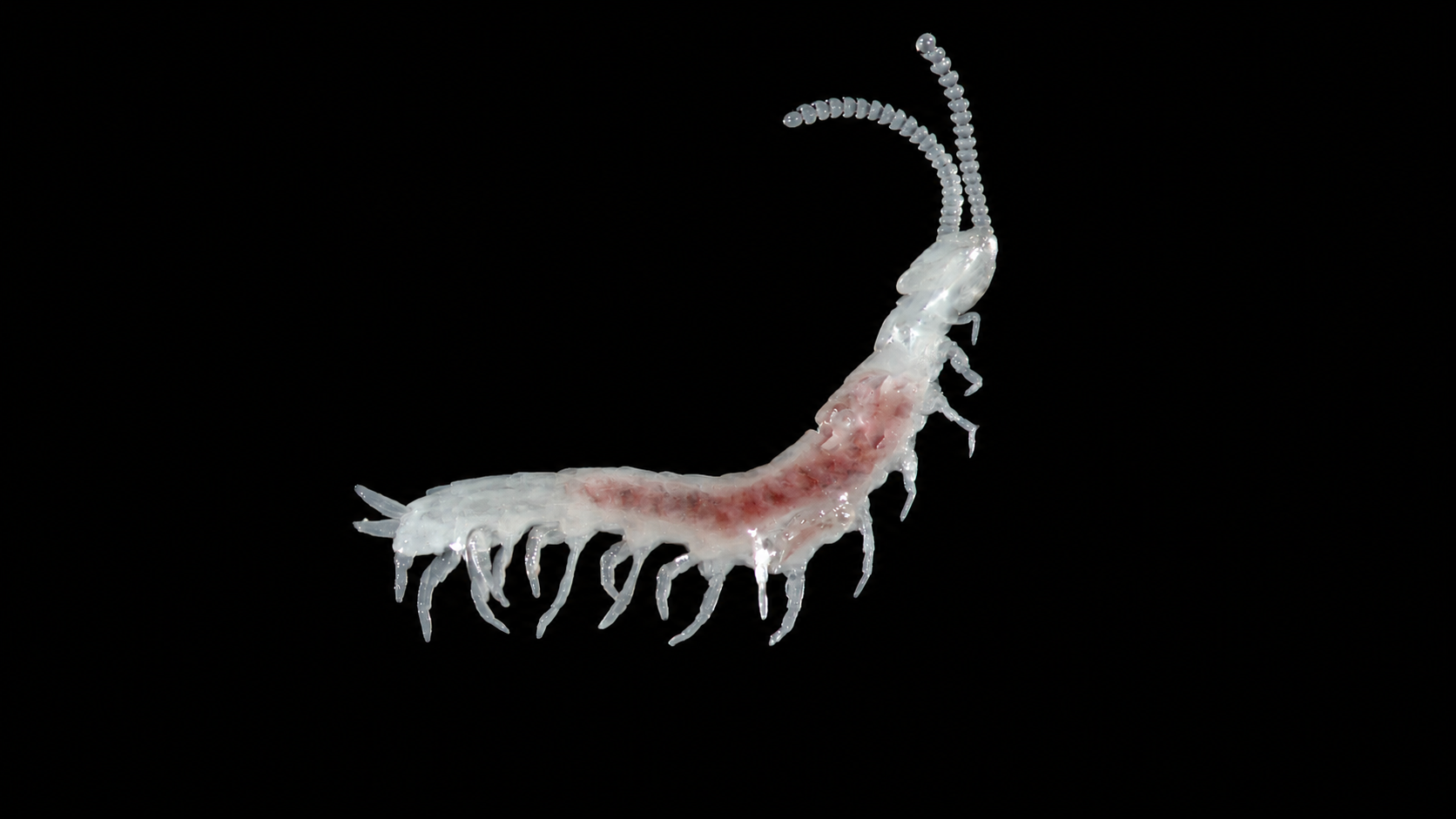
Myriapoda · Symphylans
Identification
Small white myriapods with elongated body, long antennae and numerous pairs of legs.
Small white myriapods with elongated body, long antennae and numerous pairs of legs.
Ecology
Common in humid soils rich in organic matter, where they move through soil pores and root environments.
Common in humid soils rich in organic matter, where they move through soil pores and root environments.
Bioindicator value
Generally associated with undisturbed soils and negatively affected by compaction and intensive management.
Generally associated with undisturbed soils and negatively affected by compaction and intensive management.
20
Chilopoda
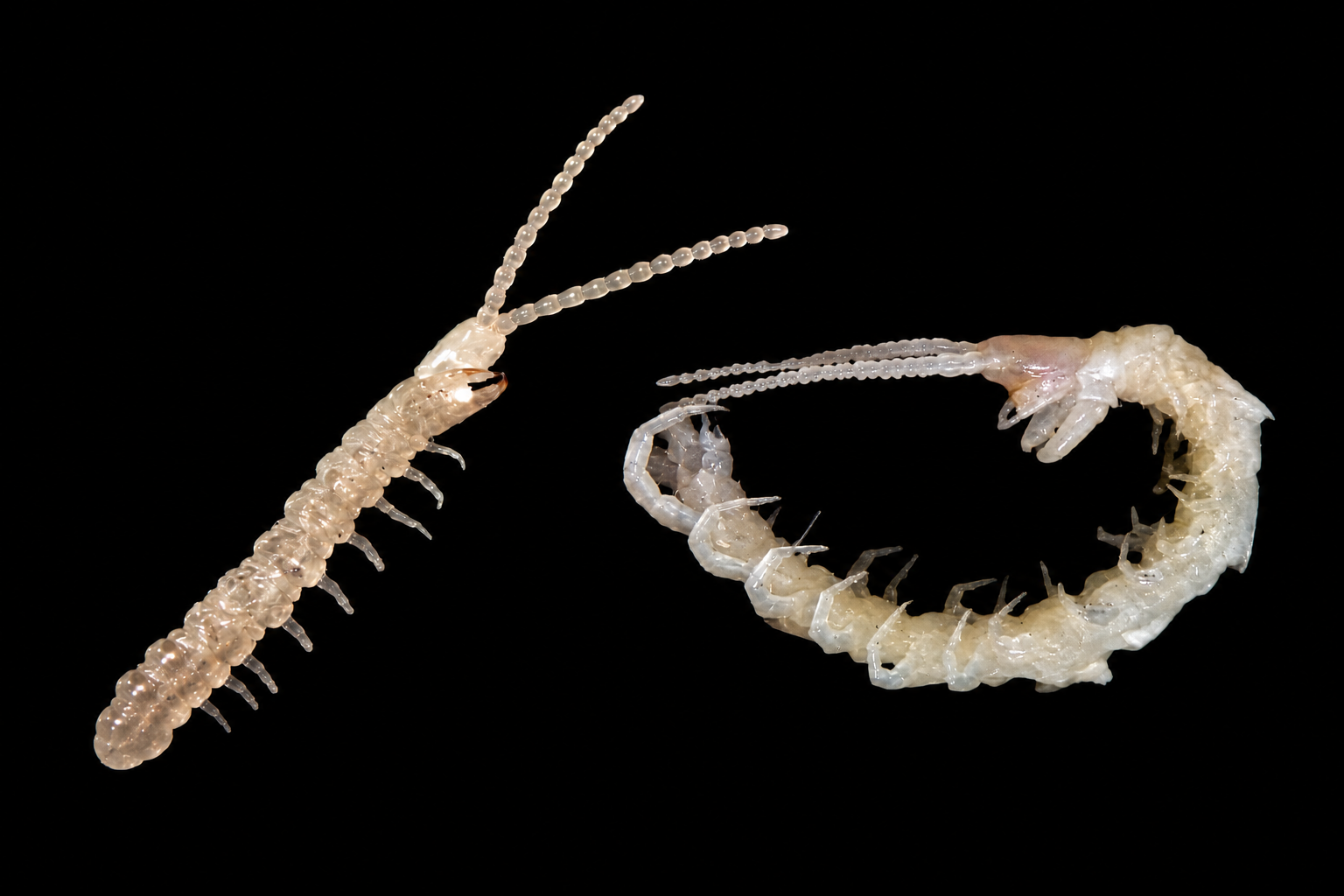
Myriapoda · Centipedes
Identification
Predatory myriapods with one pair of legs per segment and venomous forcipules adapted for prey capture.
Predatory myriapods with one pair of legs per segment and venomous forcipules adapted for prey capture.
Ecology
Important predators in litter and soil food webs. Geophilomorph centipedes are strongly associated with deeper soil horizons.
Important predators in litter and soil food webs. Geophilomorph centipedes are strongly associated with deeper soil horizons.
Bioindicator value
Large surface-active forms receive EMI 10, while small geophilomorph soil specialists receive EMI 20.
Large surface-active forms receive EMI 10, while small geophilomorph soil specialists receive EMI 20.
10
20
Diplopoda
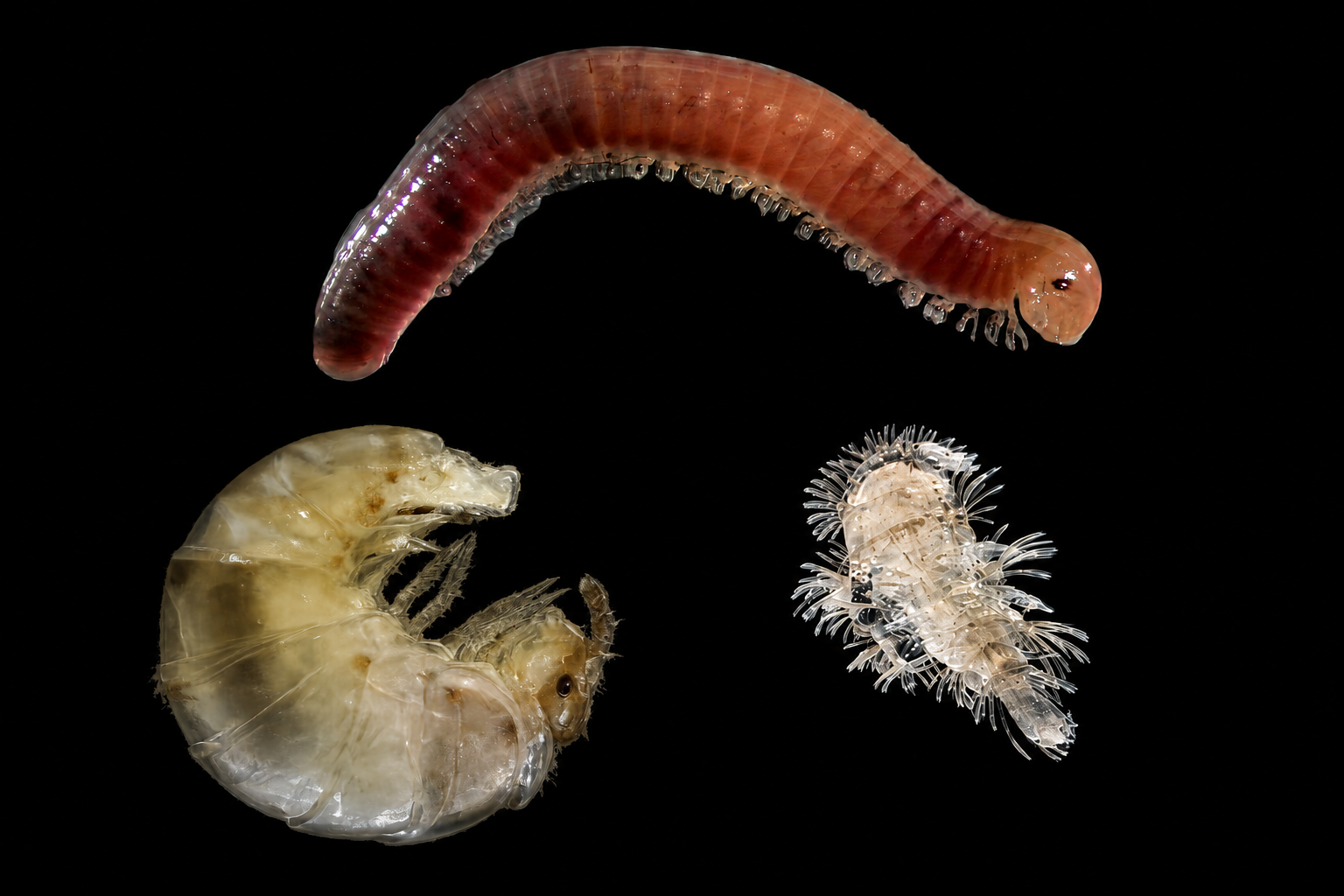
Myriapoda · Millipedes
Identification
Detritivorous myriapods characterized by two pairs of legs on most body segments. Polixenida represent a distinctive small-bodied form.
Detritivorous myriapods characterized by two pairs of legs on most body segments. Polixenida represent a distinctive small-bodied form.
Ecology
Diplopods are major decomposers of leaf litter and organic matter, contributing to nutrient cycling and soil formation.
Diplopods are major decomposers of leaf litter and organic matter, contributing to nutrient cycling and soil formation.
Bioindicator value
Large forms are assigned EMI 10, while smaller and more soil-adapted forms are assigned EMI 20.
Large forms are assigned EMI 10, while smaller and more soil-adapted forms are assigned EMI 20.
10
20
Isopoda
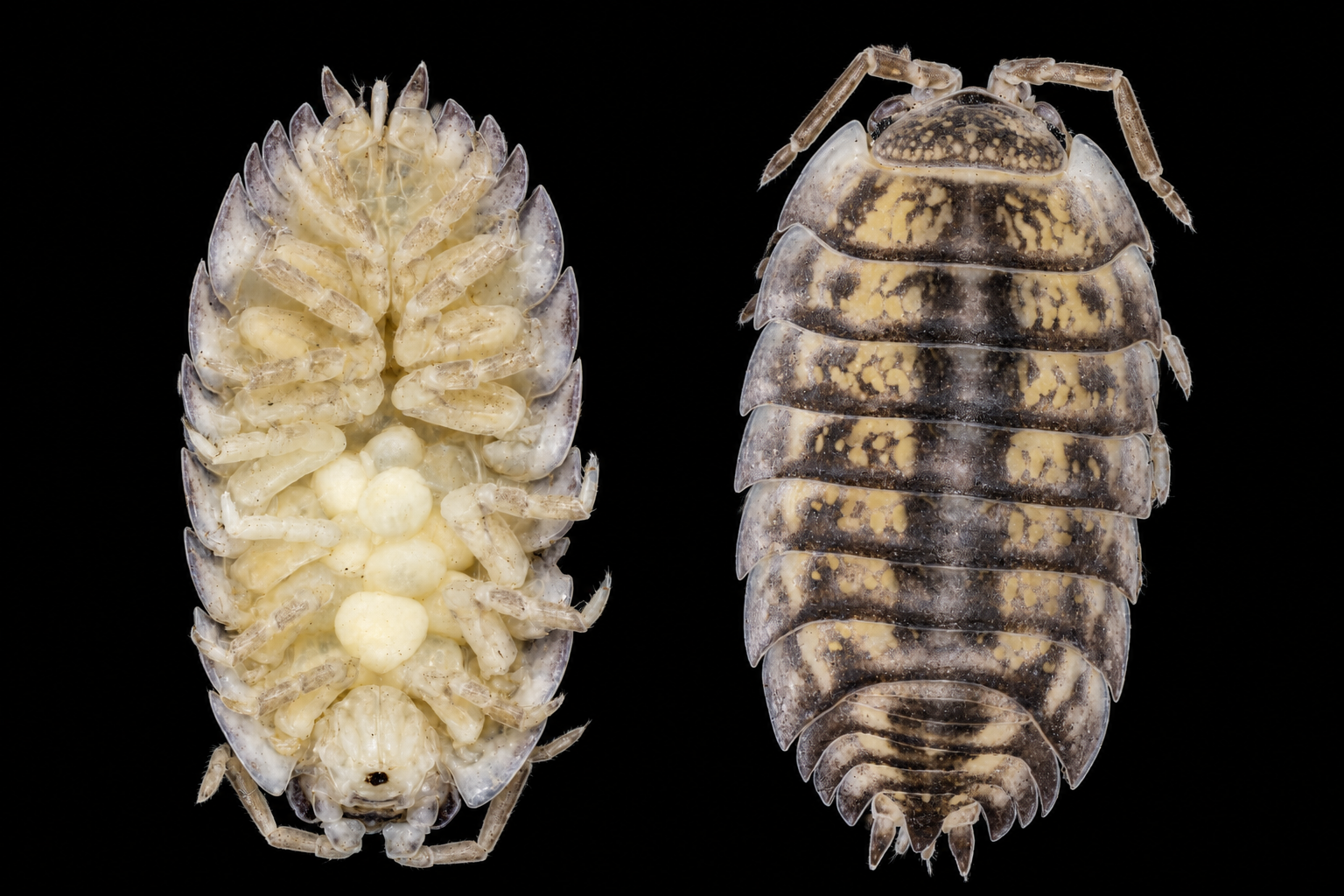
Crustacea · Woodlice
Identification
Terrestrial crustaceans with a dorsoventrally flattened body, seven pairs of walking legs and a segmented exoskeleton. The ventral side shows the characteristic crustacean body plan useful for identification.
Terrestrial crustaceans with a dorsoventrally flattened body, seven pairs of walking legs and a segmented exoskeleton. The ventral side shows the characteristic crustacean body plan useful for identification.
Ecology
Isopods are important detritivores inhabiting litter, forests, grasslands and other humid terrestrial habitats. They contribute to decomposition, nutrient cycling and organic matter turnover.
Isopods are important detritivores inhabiting litter, forests, grasslands and other humid terrestrial habitats. They contribute to decomposition, nutrient cycling and organic matter turnover.
Bioindicator value
Widely used as indicators of soil quality, agricultural management and contamination. Their abundance is strongly linked to moisture, organic matter availability and habitat stability.
Widely used as indicators of soil quality, agricultural management and contamination. Their abundance is strongly linked to moisture, organic matter availability and habitat stability.
10
 using WordPress and